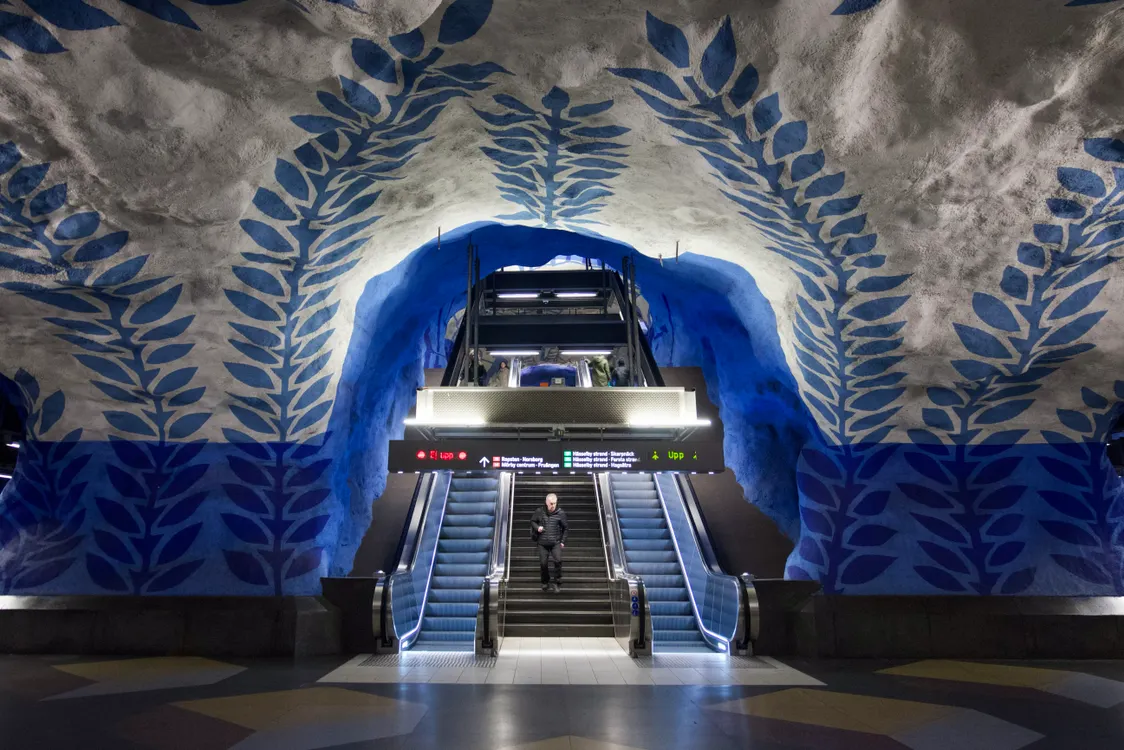
T-Centralen
This central hub features blue vine motifs and silhouettes painted on the walls and ceilings. Walk toward the blue line platform to see the primary artistic installations.
Look up at the ceiling to view the large blue vine paintings.

Stockholm's metro uses a unified fare system managed by SL, the regional public transport authority. A single journey covers all zones and modes for 75 minutes, but the cost structure and payment methods have evolved significantly since contactless technology replaced paper tickets across the network.
Quick answer
A single journey on the Stockholm metro costs 43 SEK and remains valid for 75 minutes across all SL services, including buses, trams, commuter trains, and the entire tunnelbana network. This flat-rate fare applies regardless of distance traveled within the Stockholm region. Payment is accepted via the SL app, contactless bank cards at station gates, or prepaid travel cards purchased at Pressbyrån kiosks and SL Centers.
The Stockholm metro operates on a time-based fare model rather than distance zones, a structure that distinguishes the tunnelbana from many European transit systems. Every ticket grants 75 minutes of unlimited transfers across SL's integrated network, meaning a traveler can board at Kungsträdgården, switch to a bus at T-Centralen, and continue to Solna without purchasing additional fare as long as the journey remains within the validity window. The shift away from cash transactions has reshaped how visitors navigate the Stockholm metro ticket price system. Paper tickets were phased out in 2017, and as of 2026, all fares require either the SL mobile app, a contactless payment card tapped directly at the gate, or a rechargeable SL Access card. The app offers the most flexibility for short stays, allowing travelers to activate single tickets or load multi-day passes without visiting a kiosk. Contactless bank cards charge the same 43 SEK rate per tap, with the system automatically grouping journeys made within 75 minutes to prevent double-charging. For extended visits, rechargeable travel cards provide better value than single taps. A 24-hour pass costs 175 SEK, a 72-hour pass runs 350 SEK, and a 7-day pass is priced at 525 SEK. These are loaded onto an SL Access card, a blue plastic smartcard available for a 20 SEK non-refundable fee at any staffed station or Pressbyrån convenience store. The card itself holds no value but acts as a vessel for stored credit or time-based passes. Reduced fares exist for children under 20 and seniors over 65, though proof of age is required at purchase. The tunnelbana pricing structure reflects Stockholm's broader push toward seamless urban mobility. Unlike metros that penalize tourists with premium visitor fares, the SL system charges locals and travelers identically. The 75-minute transfer window accommodates the city's geography, where cultural sites like Skansen or Fotografiska often require a metro-plus-ferry combination. Understanding this integrated approach helps visitors budget accurately and avoid the frustration of redundant ticket purchases during multi-leg journeys across the archipelago's transit network.
“The 75-minute transfer window accommodates Stockholm's geography, where reaching cultural sites often requires a metro-plus-ferry combination.”
Purchasing a Stockholm metro ticket takes under five minutes through SL's official channels. The process involves selecting your ticket type, paying, and activating it before boarding.
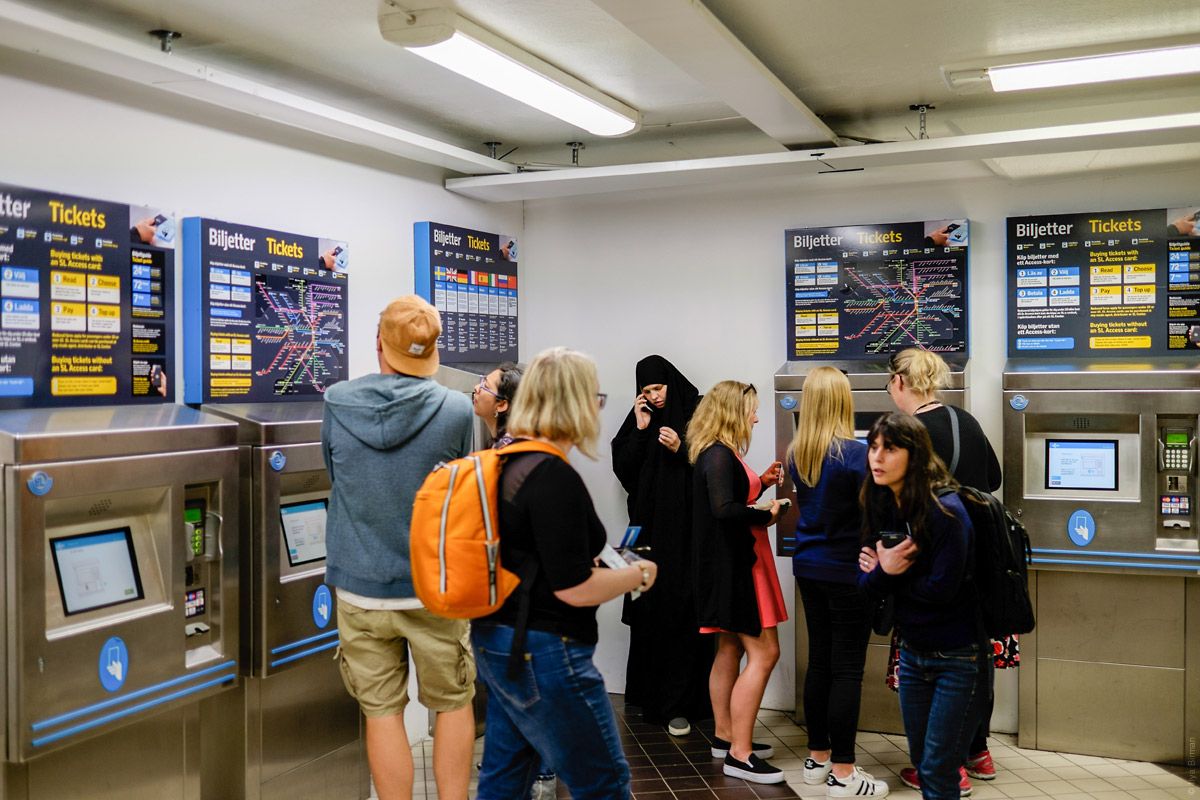
SL ticket machines are found at all metro stations near entrances. The mobile app (available for iOS and Android) offers the same ticket options and accepts international cards. Many visitors skip the app and find themselves in longer queues at machines during morning rush.
Single journey tickets cover 75 minutes across all SL transport. Travel cards (24-hour, 72-hour, or 7-day) suit visitors planning multiple trips. The machine interface defaults to Swedish—tap the British flag icon for English before selecting.
Machines accept contactless cards, chip cards, and Swedish cash. Mobile app users receive a digital ticket immediately. Paper tickets from machines print with a QR code and validity period—keep this visible as inspectors board randomly.
Paper tickets activate automatically at purchase with the 75-minute countdown starting immediately. Scan the QR code at the blue validators on gate barriers. App tickets must be activated manually by tapping 'Use ticket' before you reach the gates—this is the most common mistake that results in fines.
The Stockholm Metro operates on a consistent daily schedule throughout the week. Services run from early morning until just after midnight.
The best arrival window is 09:00–15:00 to avoid peak hour commuter congestion for a better experience of station art. Visiting during these off-peak hours provides the space needed to observe the installations without the rush of daily transit riders.
—
Trains and platforms are crowded with residents commuting to work or school. Visiting during this time makes viewing the art installations difficult.
—
This window offers the lowest passenger density for viewing art. It allows for unobstructed photography and observation of the station architecture.
—
Stations experience higher foot traffic from leisure travelers compared to mid-week mornings. Early afternoons remain preferable to late evenings for station visibility.
Verdict: Visit between 09:00–15:00 on weekdays to ensure the most comfortable environment for viewing station art.
The Stockholm Metro functions as an extensive underground art gallery, featuring installations across many of its stations. Using your ticket, you can access these platforms to view various sculptures, mosaics, and murals.
This central hub features blue vine motifs and silhouettes painted on the walls and ceilings. Walk toward the blue line platform to see the primary artistic installations.
Look up at the ceiling to view the large blue vine paintings.
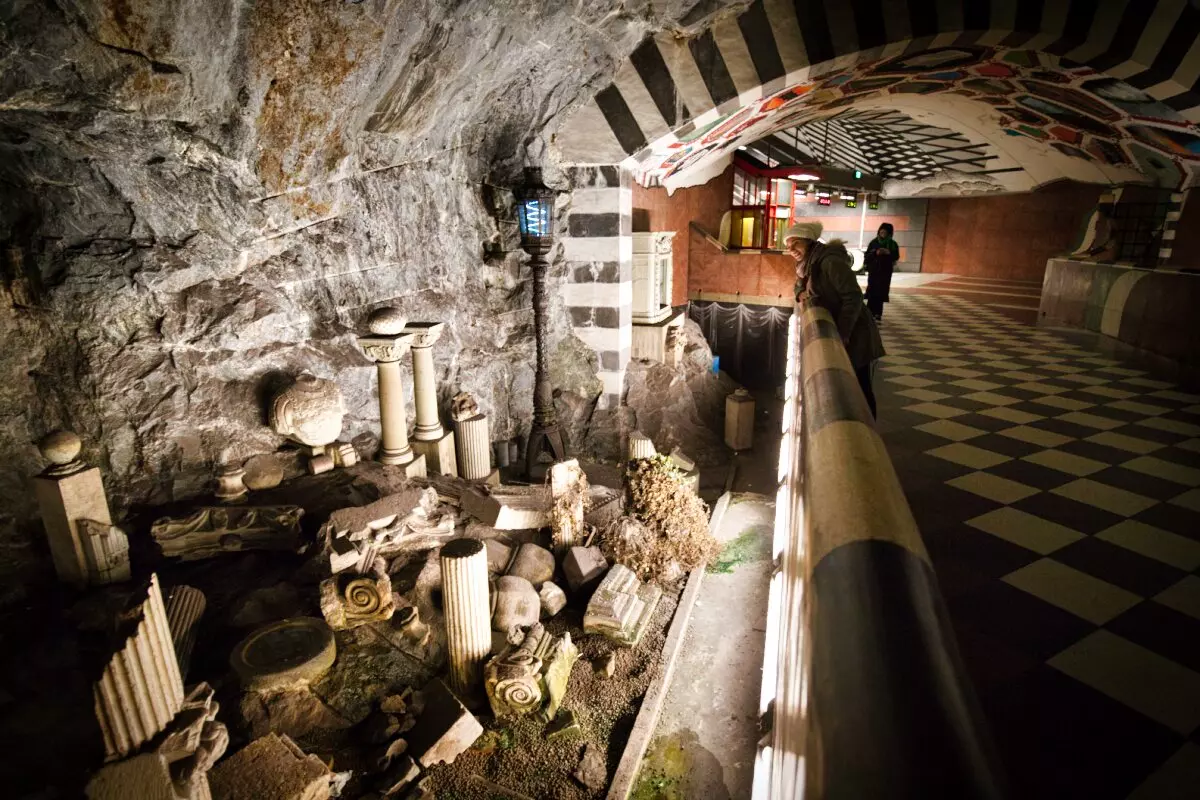
Designed to resemble an archaeological excavation, this station includes ruins and relics from the former Makalös palace. The platform features a distinct red, green, and white color scheme.
Observe the statues and remnants placed along the station walls.
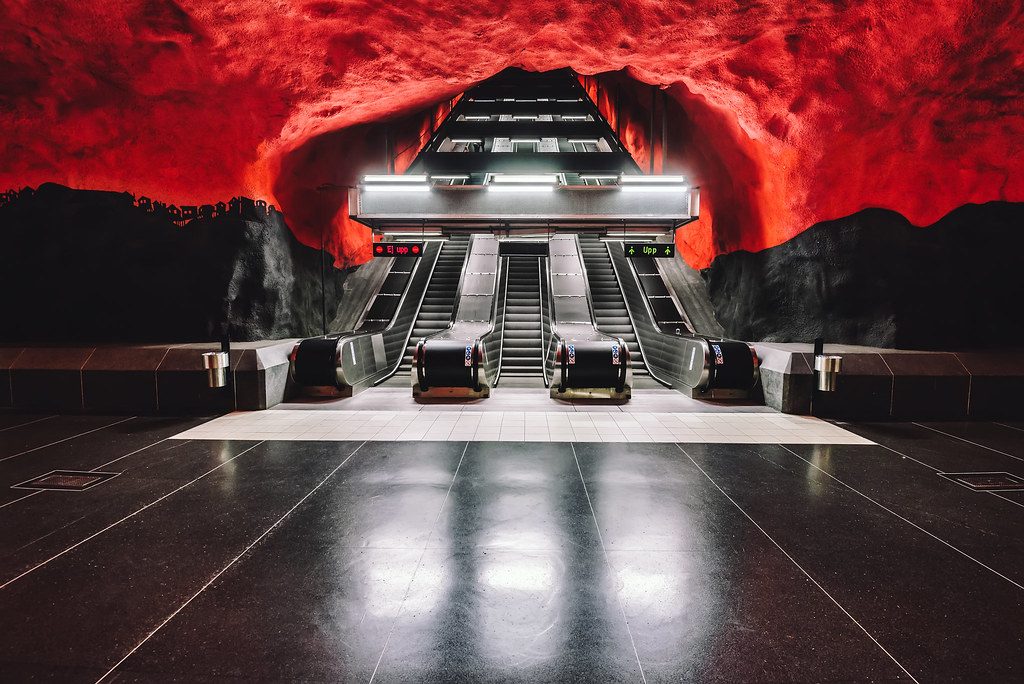
This station is characterized by its deep red ceiling and green walls, depicting a spruce forest landscape. The art focuses on themes of environmental issues and industrialization.
Walk to the far end of the platform for the best perspective.
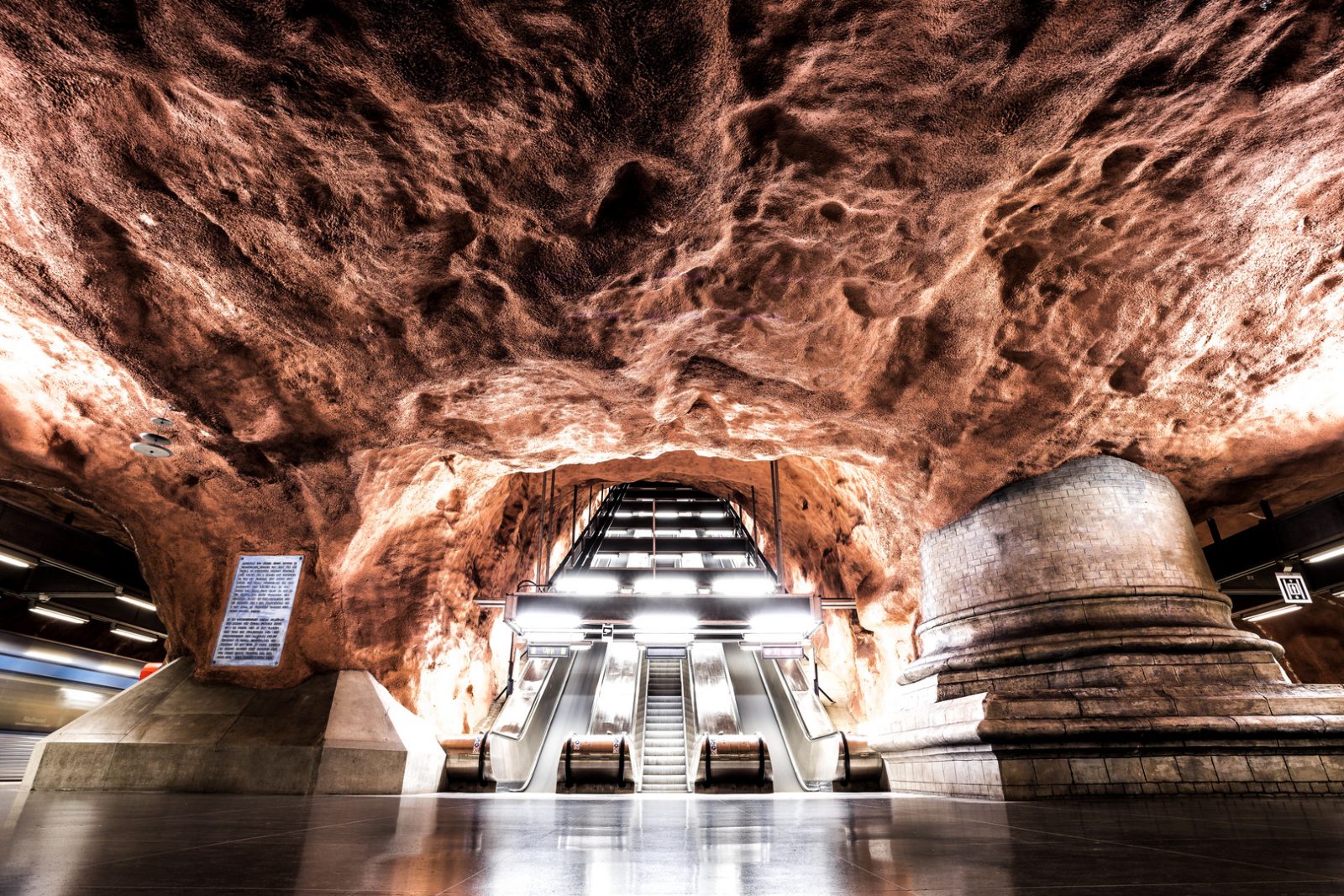
The station features raw, organic rock walls painted in shades of ochre and terracotta. It includes sculptural elements that resemble ancient artifacts embedded in the stone.
Check the elevator shafts for hidden structural art details.
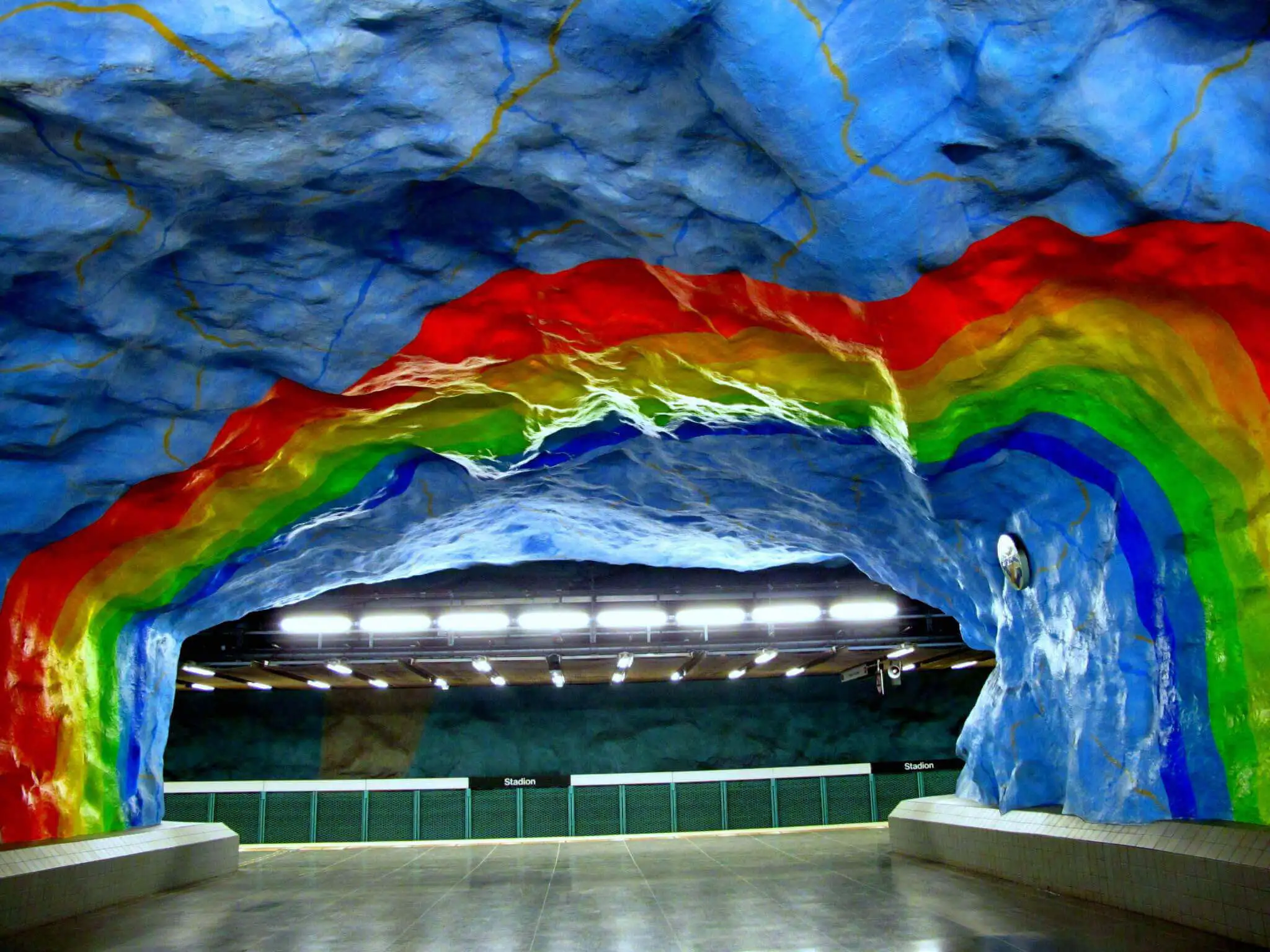
Known for its bright blue walls and large rainbow installation, this station reflects the nearby Olympic stadium. It was designed to provide a sense of open sky underground.
Step back from the platform edge to capture the rainbow arch.
Everything you need to know about stockholm metro ticket price
The standard stockholm metro ticket price is 43 SEK for a single journey. This flat rate applies across the entire SL network regardless of distance.
A single journey ticket remains valid for 75 minutes from the time of activation. During this period, you may transfer between different SL services including buses, trams, and commuter trains.
You can purchase tickets at the SL service points, via the official SL website, or through the SL mobile application. For a seamless trip through the Stockholm transit system, the app provides the most convenient access to your digital ticket.
Reduced rates are available for children, youth, and seniors, though the standard stockholm metro ticket price applies to most adult travelers. Please check the official SL website for detailed eligibility requirements regarding concession fares.
Yes, you can pay for your Stockholm Subway fare using a contactless credit card or a mobile payment device at the ticket readers. This modern method is widely accepted and eliminates the need for paper vouchers or pre-purchased cards.
To enjoy the station art without heavy commuter traffic, we recommend visiting between 09:00 and 15:00. This window allows you to explore the colorful tunnelbana platforms at a relaxed pace while avoiding the busiest travel times.