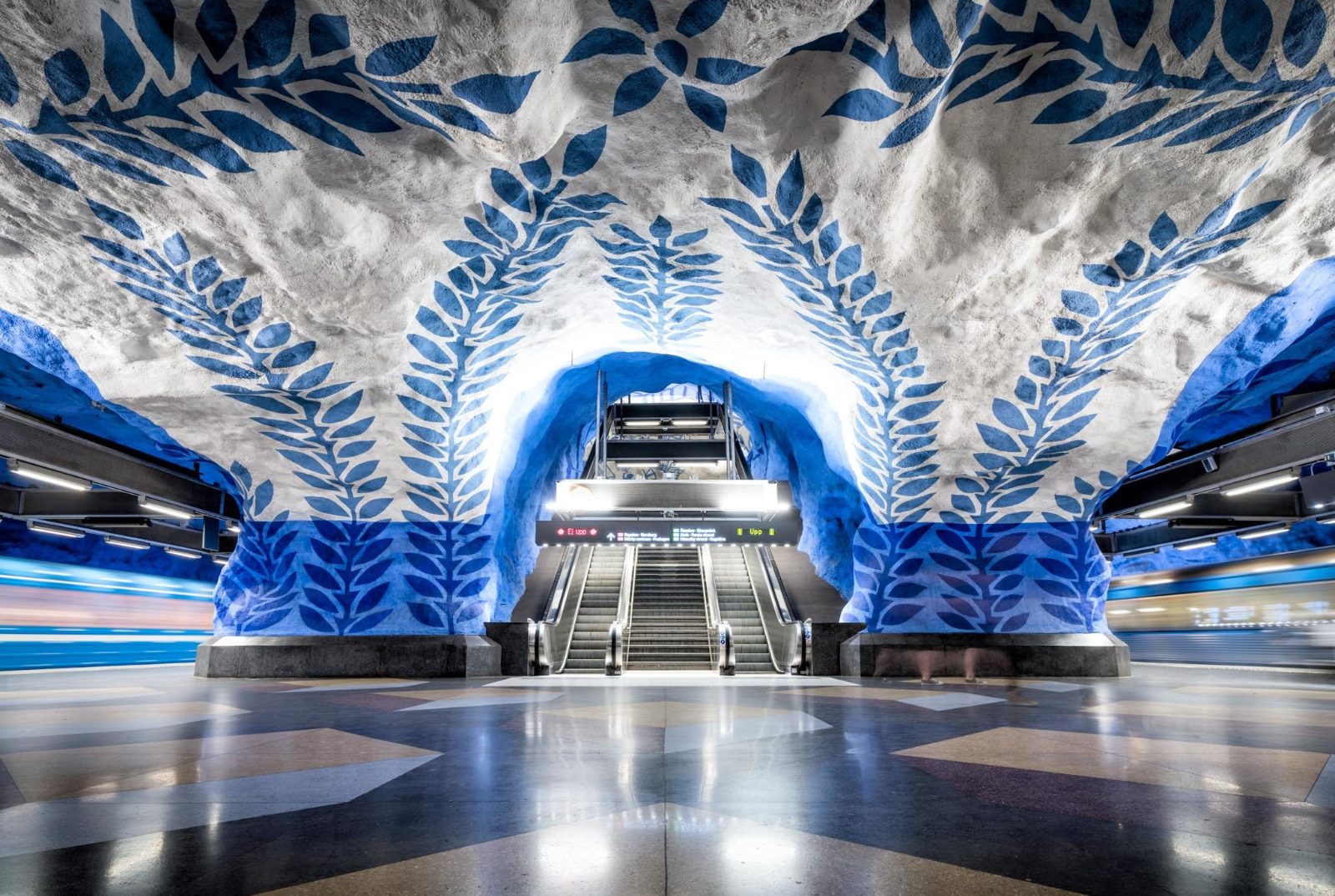
T-Centralen
This central hub features blue vine motifs and floral silhouettes painted across the walls and ceilings. It serves as the primary intersection for the city's metro lines.
Look for the blue leaf patterns on the platform ceilings.
Stockholm's Tunnelbana operates as the world's longest underground art gallery, with over 90 of its 100 stations decorated by more than 150 artists. Seven stations anchor the art tour route, each chosen for its distinctive design approach and cultural narrative. This guide identifies the most famous platforms and explains what makes each one essential viewing.
Quick answer
The stockholm metro art best stations include T-Centralen with its iconic blue vine motifs on the Blue Line platform, Kungsträdgården's archaeological excavation aesthetic with classical columns and red bedrock, Solna Centrum's kilometer-long red cave ceiling depicting Swedish forestry, Rådhuset's terracotta sculptures and Roman excavation references, Stadion's rainbow ceiling commemorating the 1912 Olympics, Tekniska Högskolan's geometric scientific diagrams, and Thorildsplan's sculptural installations. All seven stations require only a valid SL public transport ticket for access.
The Blue Line platforms at T-Centralen station anchor every stockholm metro art best stations guide because they represent the system's founding artistic vision. Artist Per Olof Ultvedt painted the exposed bedrock ceiling blue in 1975 and stenciled white vine silhouettes across the raw stone, establishing the Tunnelbana's signature practice of leaving rock walls unfinished as canvases. The junction connects all three metro lines, which means every art tour visitor passes through these vaulted chambers at least twice. Kungsträdgården station functions as an underground museum of Stockholm's demolished architecture. When the city razed the Makalös Palace and cleared land for modern development, artist Ulrik Samuelson salvaged baroque columns, 18th-century statuary, and fragments of the palace façade, then embedded them into the station's red-painted bedrock walls. Archaeological artifacts line the platforms alongside contemporary installations, creating a layered historical narrative that contrasts sharply with the minimalist Scandinavian aesthetic above ground. The red ceiling at Solna Centrum extends for more than a kilometer along the platform, making it the largest single artwork in the subway system. Artists Anders Åberg and Karl-Olov Björk painted the spruce-green lower walls to represent Sweden's forests, then coated the ceiling blood-red to symbolize environmental destruction and rural depopulation during the 1970s industrialization period. The silhouettes of elk and fir trees appear in darker tones against the crimson stone, visible from both directions of the northbound Red Line. Rådhuset station takes its name from Stockholm's City Hall and translates that civic architecture into terracotta sculptures and earth-toned mosaics. The platforms reference Roman archaeological digs through exposed column fragments and earth-layer striations painted onto the walls. Stadion station celebrates Sweden's 1912 Olympic Games with a rainbow arc painted across the tunnel ceiling, while Tekniska Högskolan displays scientific diagrams, geometric patterns, and tributes to Swedish engineering achievements in its Blue Line chambers. Thorildsplan offers abstract sculptural installations and bold color-block painting across its Green Line platforms, completing the canonical set of stations that define the stockholm metro art best stations tour.
“The Blue Line platforms at T-Centralen established the Tunnelbana's signature practice of leaving rock walls unfinished as canvases.”
The best arrival window for Stockholm metro art stations is 10:00–15:00. Visiting during this period allows you to avoid peak commuter traffic, ensuring clear platforms for photography.
—
Commuter traffic subsides significantly after 09:00. Mid-day visits provide the most space for viewing installations.
Mild temperatures (15°C–22°C)
Stockholm experiences higher tourism levels from June through August. Weekday midday remains the quietest time to explore.
Cold temperatures (-5°C–2°C)
Public transport is warmer than walking between surface attractions. Midday hours are ideal for escaping the shorter daylight.
Verdict: For the quietest experience, visit Tuesday to Thursday between 10:00 and 15:00 during the shoulder months of April or October.
Access to the Stockholm metro art stations is included with a valid public transport ticket. There is no separate fee charged to view the art installations.
Verdict: A typical adult pays 42 SEK for a single journey, with costs varying based on travel zone and ticket duration options available through SL.
The Stockholm metro network operates on a consistent schedule seven days a week, allowing access to the station art installations throughout the day and late evening.
The Stockholm Metro functions as a subterranean gallery featuring diverse artistic installations across its network. These selections highlight the most prominent stations characterized by their distinct architectural and visual narratives.
This central hub features blue vine motifs and floral silhouettes painted across the walls and ceilings. It serves as the primary intersection for the city's metro lines.
Look for the blue leaf patterns on the platform ceilings.
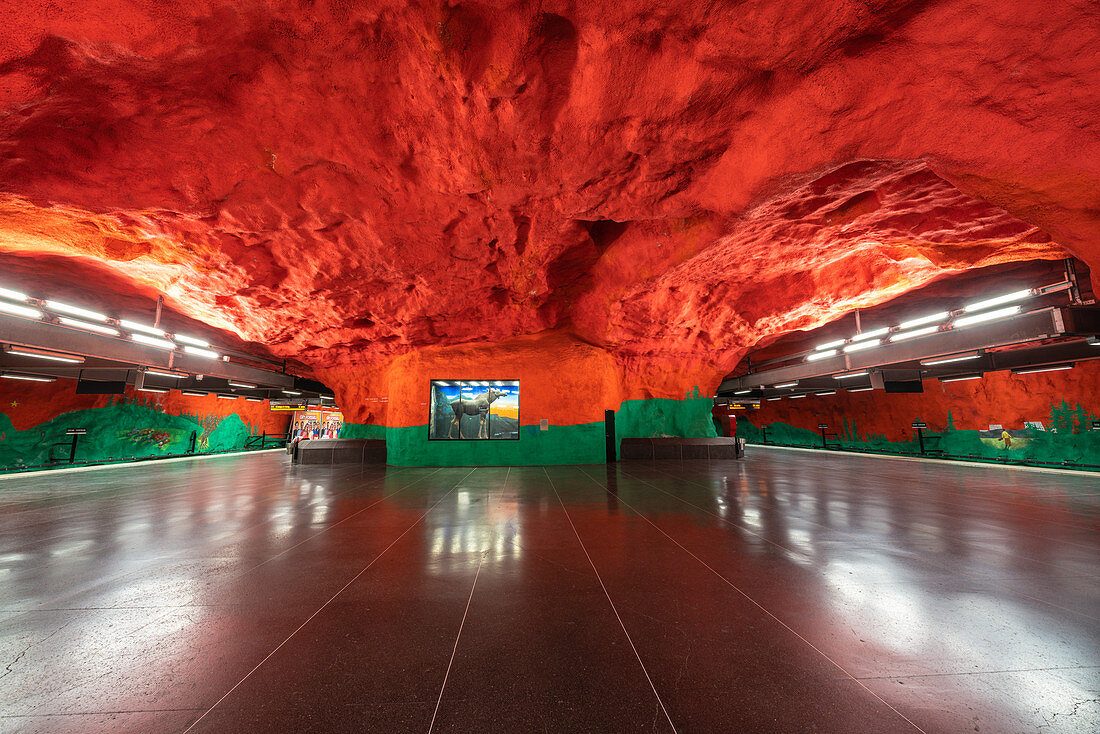
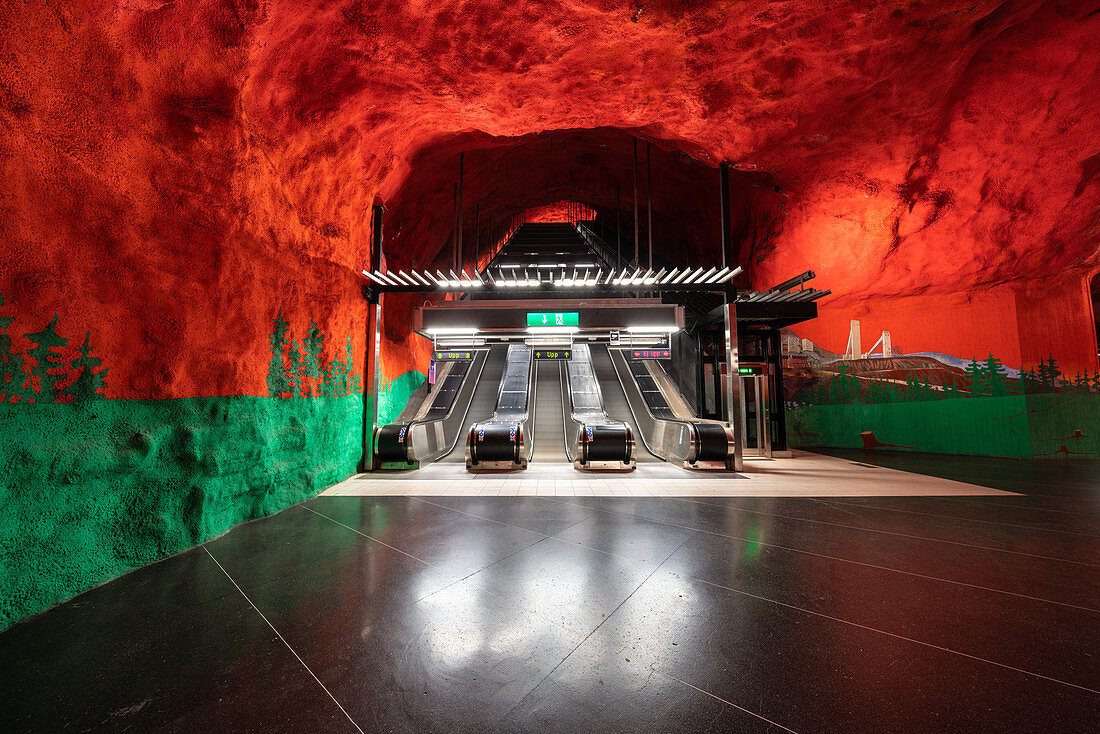
The station is defined by a deep red ceiling and green walls depicting a forest landscape. The artwork references environmental and social issues from the 1970s.
Observe the painted spruce trees from the platform ends.
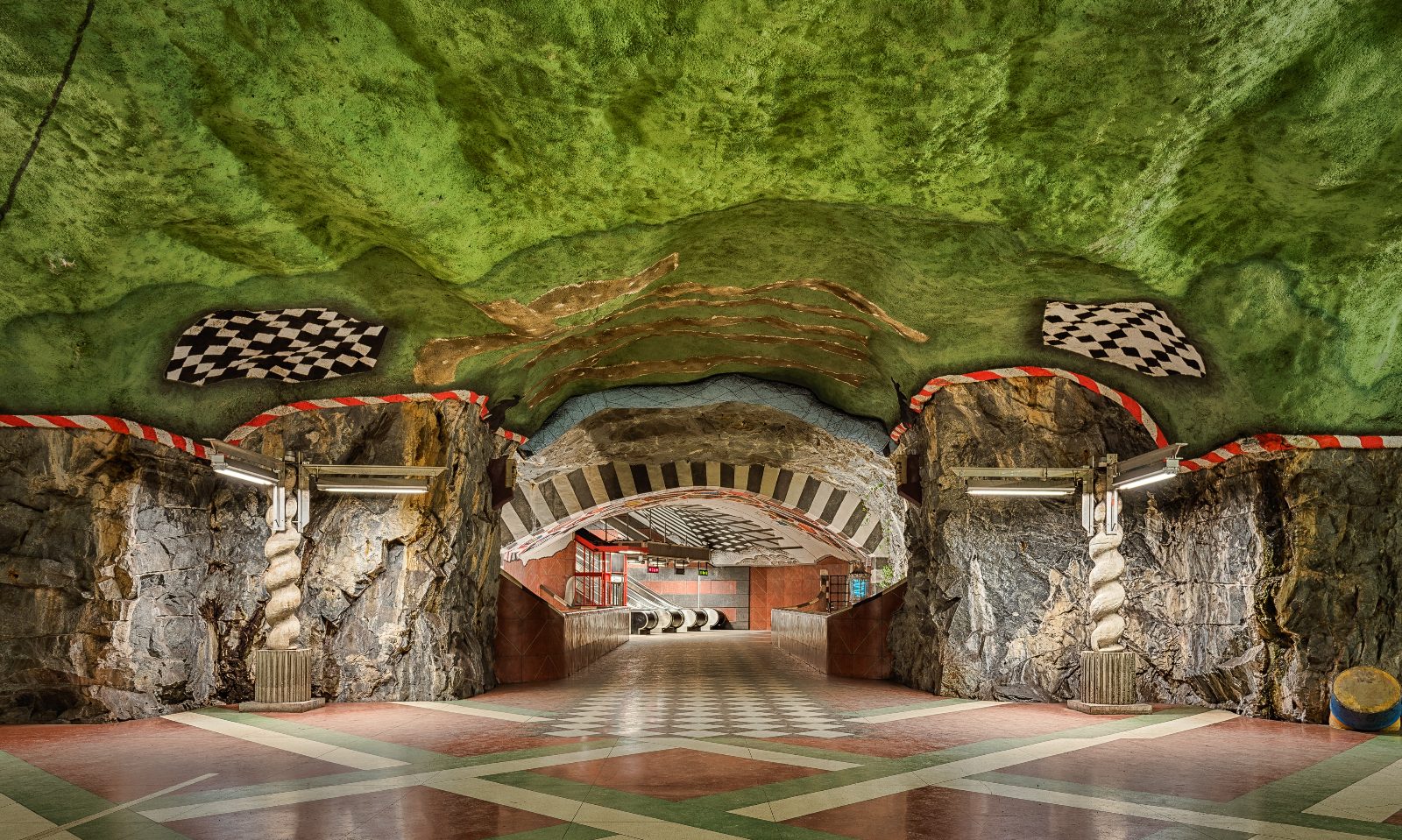
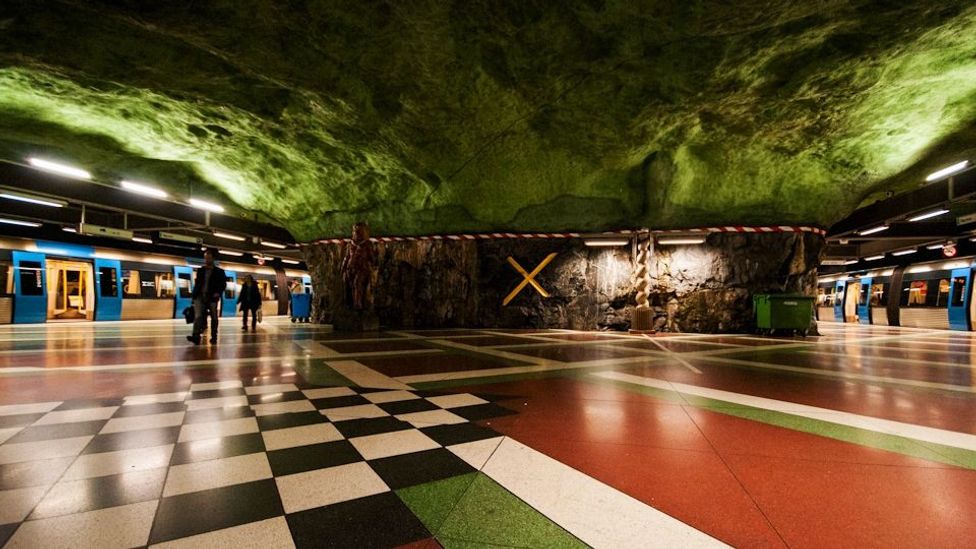
This station resembles an archaeological excavation with remnants of the old Makalös palace displayed throughout. The platform features unique colored patterns and sculptures.
Check the ground level for historical statue fragments.
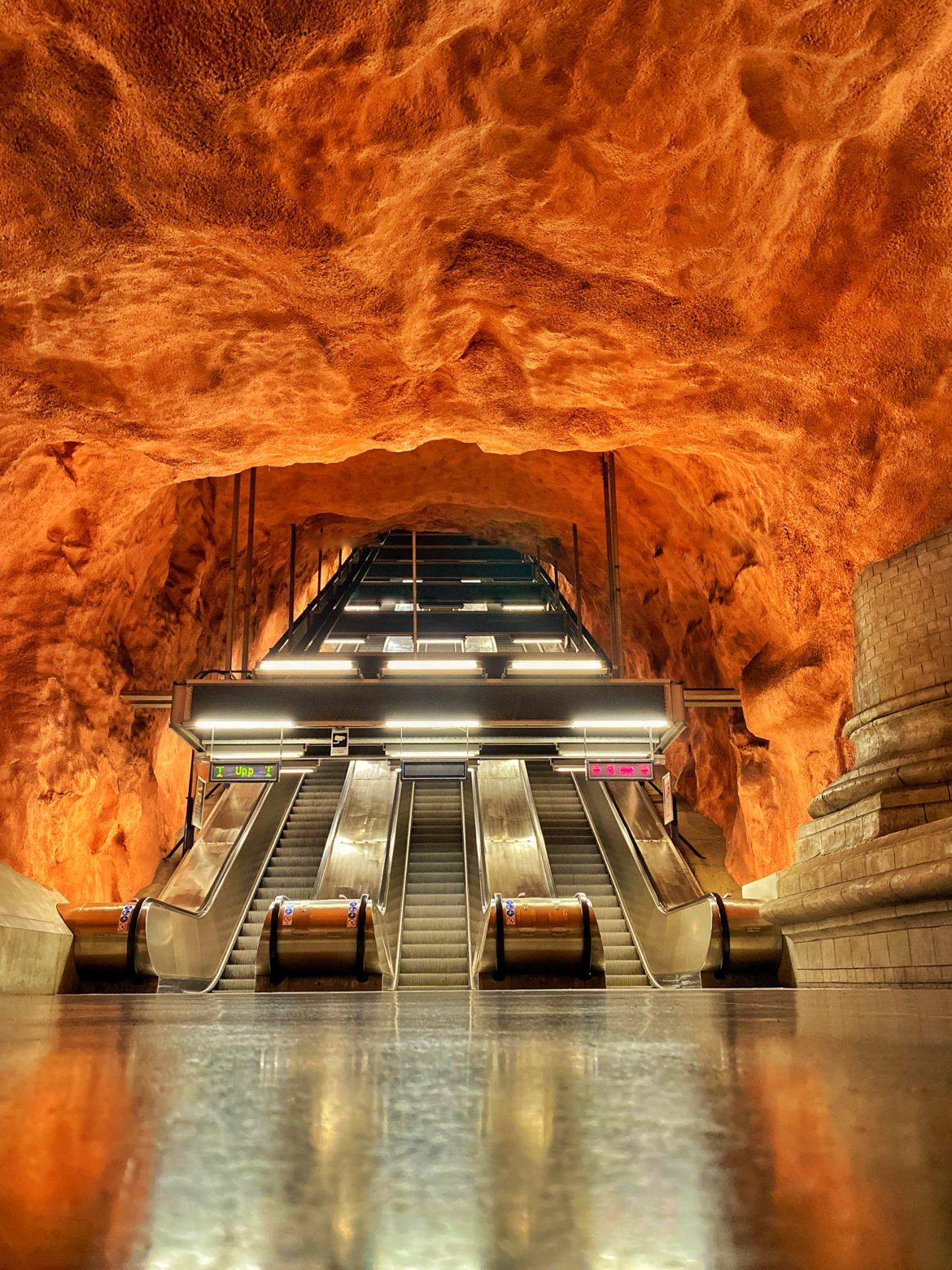
The station platform is carved directly into the bedrock and painted in warm, earthy ochre tones. It creates the visual effect of being inside a natural cavern.
Walk toward the end of the platform for depth.
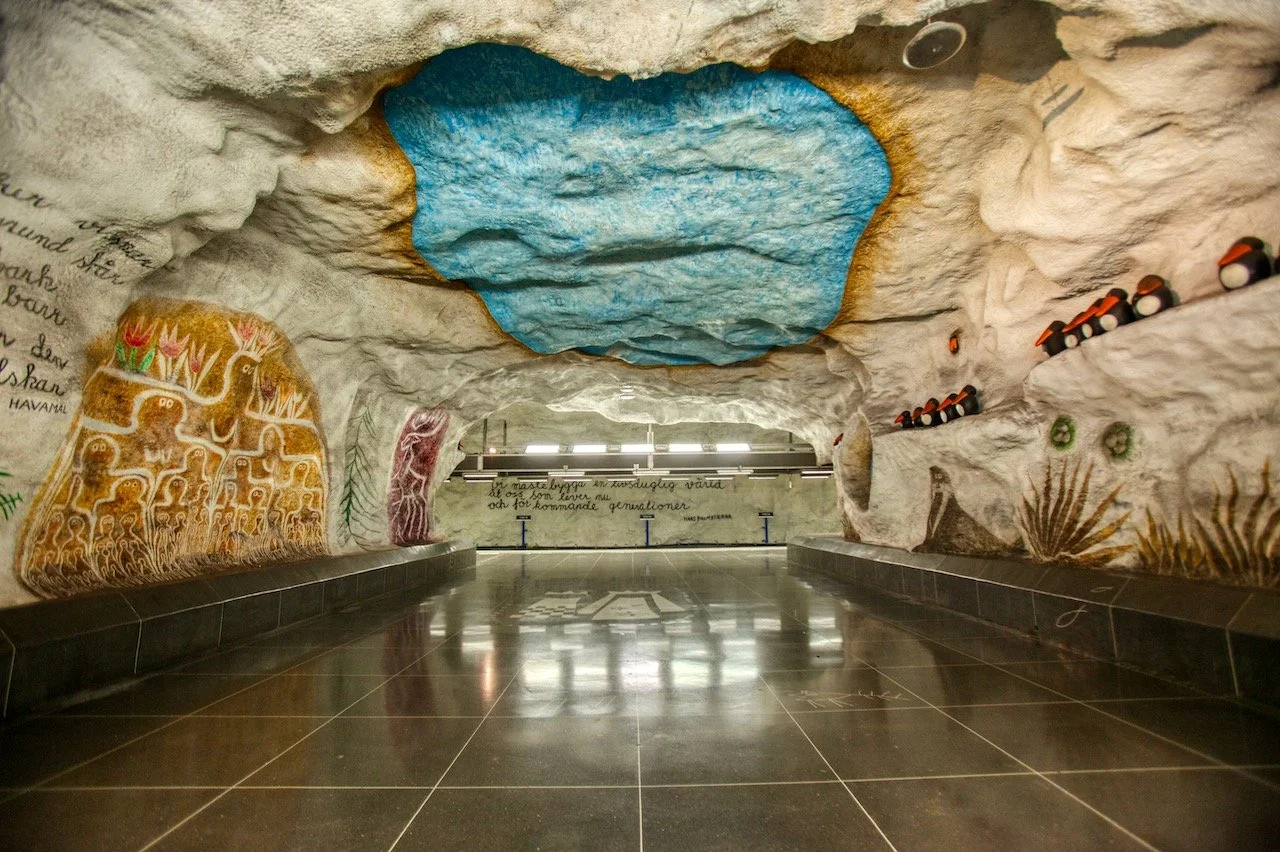
The platform features naive-style paintings, sculptures, and inscriptions celebrating cultural diversity. Notable elements include penguin figures and poems along the walls.
View the animal sculptures placed along the station pillars.
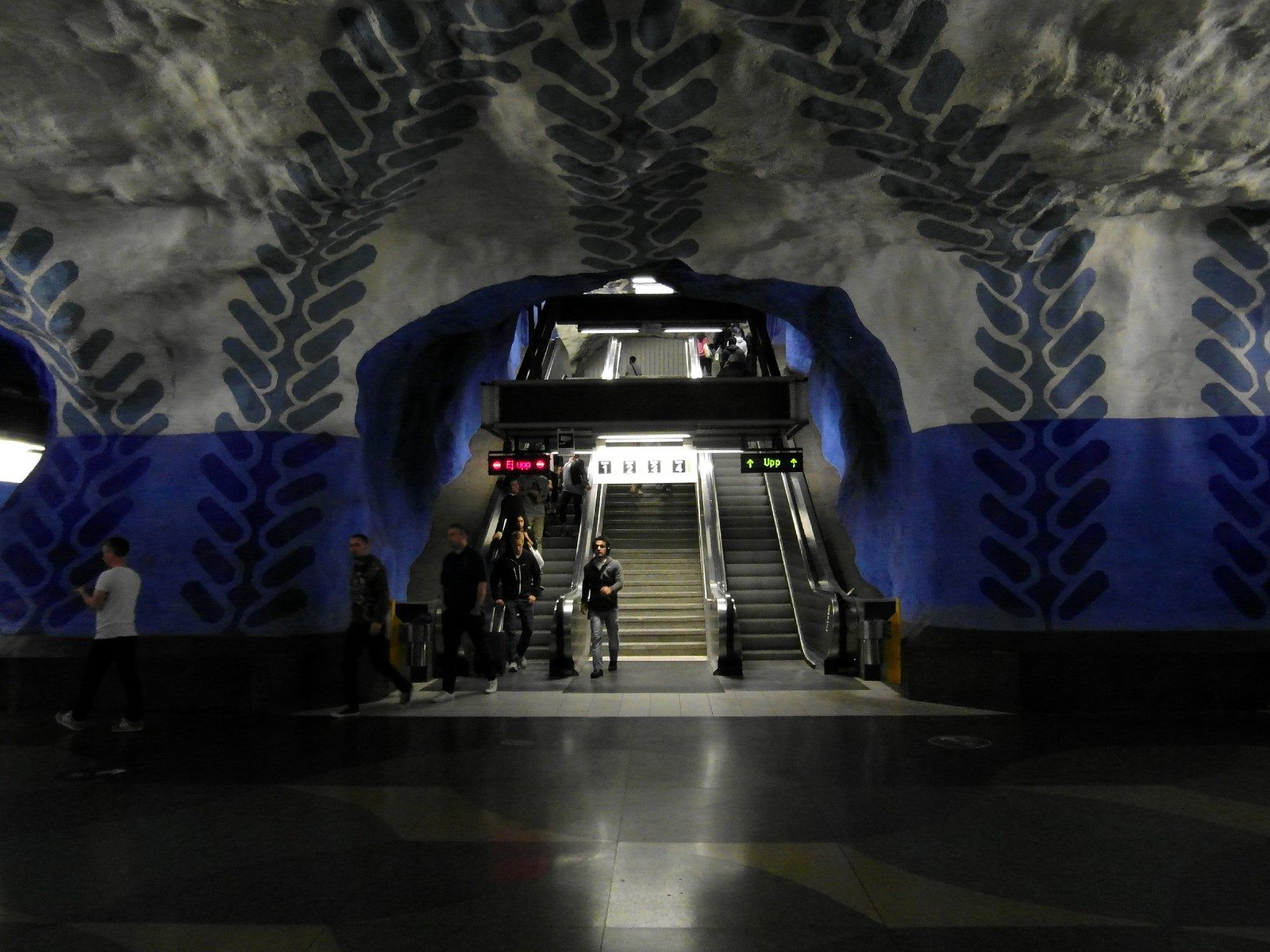
10:00–15:00
Stand at the far end of the platform to capture the curved ceiling and blue leaf patterns in a single frame.
10:00–15:00
Position the camera at the top of the long escalator for a symmetrical shot of the red and green cavern walls.
10:00–15:00
Use the wide-angle lens at the base of the main staircase to frame the excavated rock ceiling and mosaic floor.
10:00–15:00
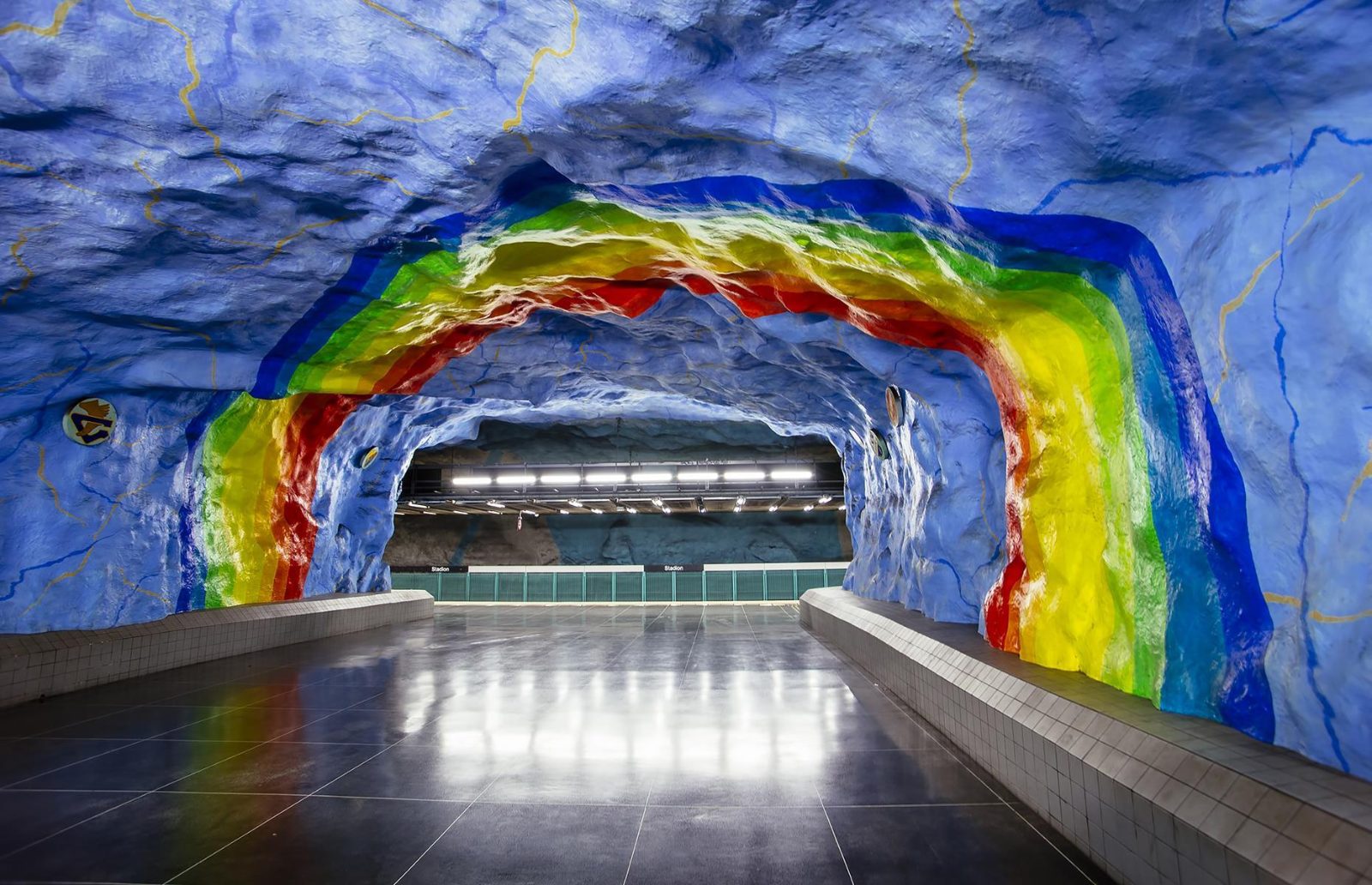
Frame the rainbow mural against the curved rock walls by standing near the platform center.
10:00–15:00
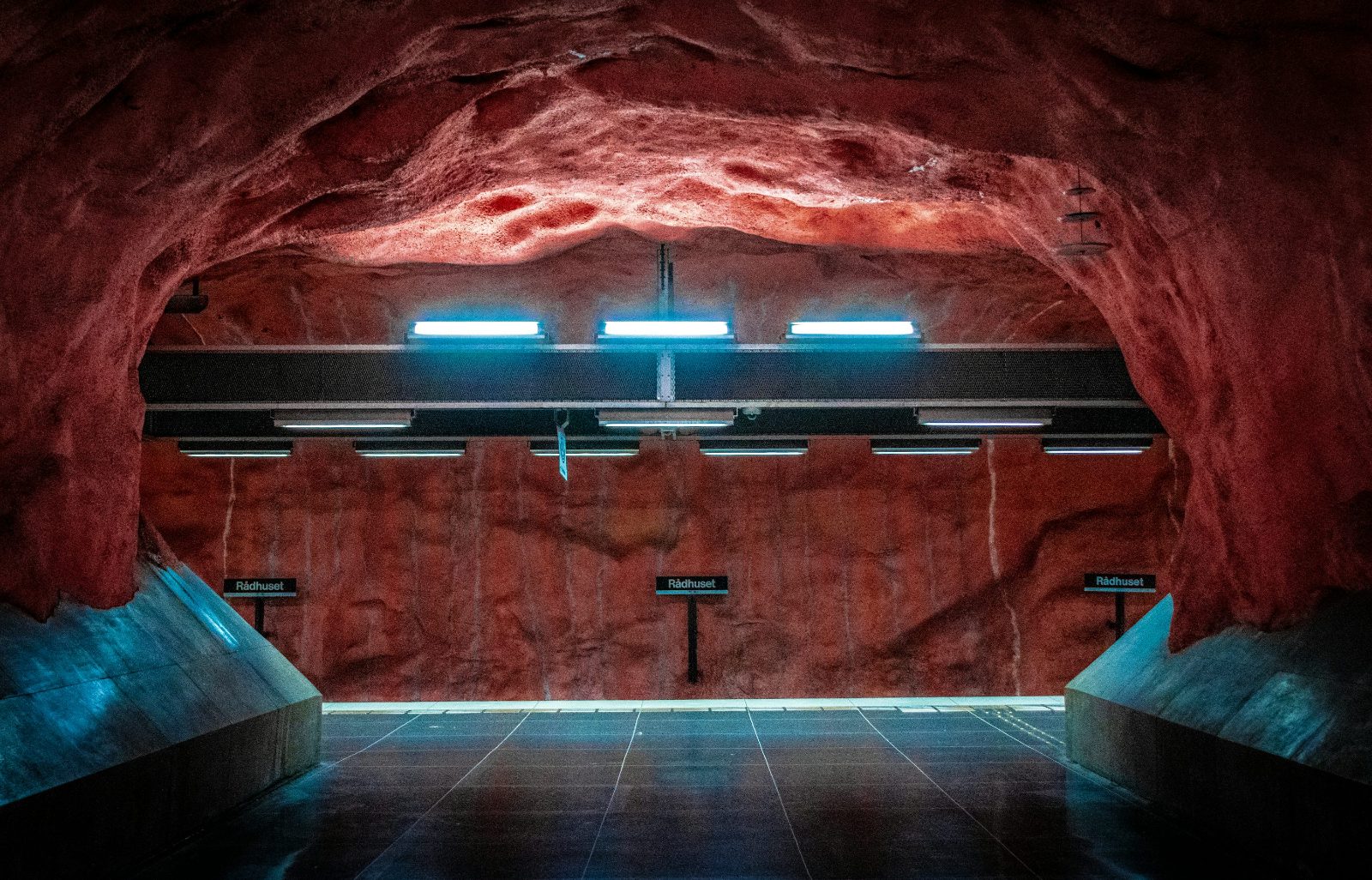
Focus on the transition between the tunnel entrance and the dark red sculpted rock walls.
This half-day route connects the blue line's most celebrated stations with the red and green lines' highlights, ideal for first-time visitors seeking concentrated artistic exposure. Allow 3–4 hours including platform time and transfers.
Begin on the blue line platform to see Ulrik Samuelson's blue and white vine motifs covering walls and ceilings—the network's central hub and most photographed station. Spend 15 minutes here.
Take the blue line two stops east to explore Anders Åberg and Ulrik Samuelson's underground garden with classical sculptures, fountains, and excavated building fragments. Allow 20 minutes.
Transfer to the blue line westbound, then switch to green line at T-Centralen toward Rådhuset to see Sigvard Olsson's exposed red-brown bedrock and terracotta reliefs. 15 minutes.
Continue green line north to Stadion for Per Olof Ultvedt's rainbow arch celebrating the 1912 Stockholm Olympics, carved directly into the rock vault. 15 minutes.
Transfer to blue line at T-Centralen, heading northwest to see Anders Åberg and Karl-Olov Björk's kilometer-long red and green panorama depicting 1970s social themes. 20 minutes.
Continue blue line further northwest to Tensta (Helga Henschen's multicultural themes) or backtrack slightly to Rissne (Elis Eriksson's storybook panels). Choose one; 15 minutes.
Backtrack on the blue line to T-Centralen, where you can connect to the red line's Stadshagen or Universitetet stations if time permits, or conclude your tour. Transfer takes 10 minutes.
Everything you need to know about stockholm metro art best stations
Travelers often prioritize stations like T-Centralen, Solna Centrum, and Kungsträdgården when seeking the stockholm metro art best stations. These locations feature unique sculptures, mosaics, and murals carved directly into the bedrock. Planning your route ahead allows you to explore these iconic transit landmarks efficiently. Exploring the underground network is a common activity for those interested in seeing world-class public installations.
There is no specific entrance fee to view the platforms, as they are part of the public transport system. You only need a valid SL public transport ticket for network access to reach these locations. Entry is essentially 0 SEK beyond the cost of your transit fare. Please ensure you have a ticket before entering the station gates.
To enjoy a comfortable experience, the best arrival window is 10:00–15:00. Visiting during these hours helps you avoid peak commuter congestion and provides clearer platforms for photography. Following these timing recommendations makes for a much more relaxed subway art excursion.
Yes, these stations are highly accessible for families and make for an engaging visit. The underground environment is fascinating for children and creates a memorable experience during a Stockholm subway tour. Just ensure you keep close supervision of children near the platform edges while viewing the artistic displays.
Many visitors fail to research the stockholm metro art best stations before arrival and miss the most distinct installations. Another common error is attempting to visit during rush hour, which makes it difficult to appreciate the art or take photos. Planning your visit outside of busy commuter times ensures a better experience for everyone. Always verify your route map to avoid getting lost in the extensive network.
You can access the network using any valid SL public transport ticket, which allows you to ride the trains to your chosen stops. The system is well-connected, with T-Centralen acting as the main hub for the Stockholm metro art best stations. Once you have a ticket, you are free to explore the platform levels at your own pace.